
Pakistan Military Ends Balochistan Offensive After Killing At Least 216 Militants
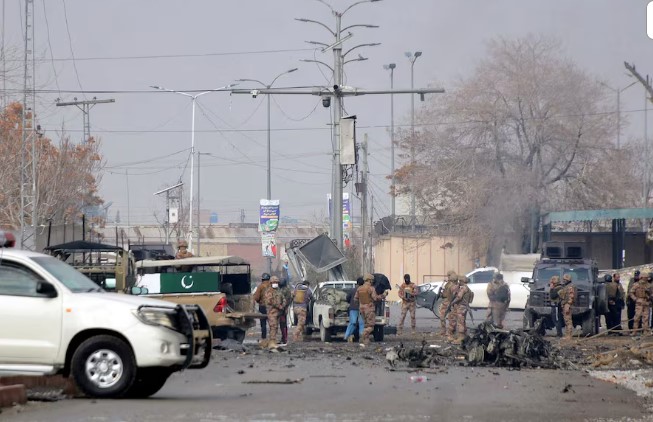
Pakistan’s military has concluded a major week-long security operation in Balochistan, announcing that at least 216 militants were killed during coordinated counter-insurgency actions in the southwestern province.
What Happened in Balochistan?
The offensive, launched amid rising violence by separatist groups including the Baloch Liberation Army (BLA), began in late January and lasted through early February. Militants carried out widespread attacks on schools, banks, markets and security installations, prompting one of the largest military responses in the region in years.
According to the Pakistan Army, the operation — named “Operation Radd Al-Fitna 1” — was designed to counter the surge in insurgent violence and restore stability across the resource-rich but restive province.
Casualties: Militants, Civilians and Security Forces
Officials confirmed that during the course of the fighting:
- At least 216 militants were killed by security forces.
- 22 security personnel lost their lives.
- 36 civilians, including women and children, were also killed in the clashes.
These figures reflect the intensity of the clashes and underline the human cost of the conflict.
Key Towns Retaken and Military Tactics
One of the notable developments during the offensive was the brief seizure of the desert town of Nushki by militants — a strategic location roughly 50,000 residents call home. Pakistani security forces eventually retook control of the town after several days of heavy fighting supported by helicopters and drones.
Security officials describe the campaign as intelligence-driven and coordinated, involving ground troops working alongside aerial units to dismantle militant networks throughout the province.
Why This Matters
Balochistan is Pakistan’s largest province by land area and is strategically significant due to its border with Iran and Afghanistan and proximity to major infrastructure projects such as the Gwadar deep-sea port.
For decades, the region has experienced periodic insurgent activity, driven by ethnic Baloch separatists seeking greater autonomy and control over local resources. The recent surge in violence and the military’s response highlight ongoing tensions over governance, security and development in the province.